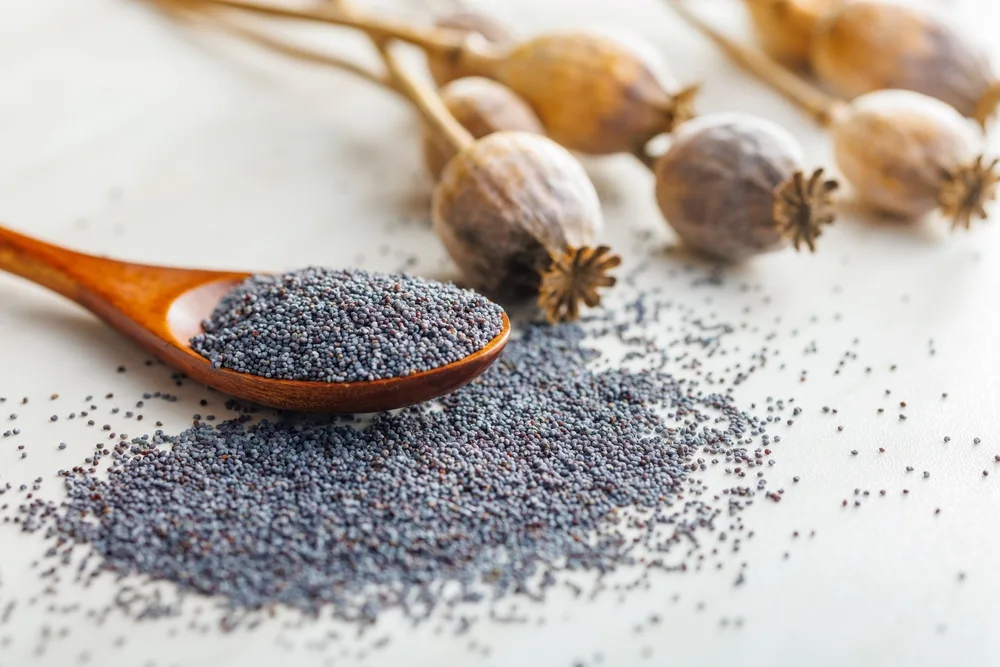
Poppy seeds show up on bagels, in salad dressings, and scattered over lemon muffins—but they rarely get credit for much beyond texture and crunch. That’s worth reconsidering. These tiny blue-grey Seeds are one of the more mineral-dense foods you can add to your diet, delivering meaningful amounts of calcium, magnesium, zinc, and copper in just a tablespoon.
From a weight loss standpoint, poppy seeds are calorie-dense—about 47 calories per tablespoon—but those calories come with protein, fiber, and slow-digesting fats that support fullness and metabolic function. This isn’t a food you’d eat in large quantities, but as a consistent addition to your cooking, it adds up nutritionally.
Here’s what the nutrition actually looks like, how poppy seeds compare to other seeds, and how to use them in a way that supports your goals.
✅ Quick answer
Yes – poppy seeds can support weight loss when used in appropriate portions. One tablespoon delivers fiber, protein, and minerals that support metabolism and satiety, all for just 47 calories.
🚀 Weight-loss benefits of poppy seeds
- Minerals that support metabolic function – Poppy seeds contain meaningful amounts of magnesium, zinc, and copper—three minerals involved in metabolic enzyme function and energy production.
- Fiber and fat that slow digestion and support fullness – The combination of fiber and polyunsaturated fat slows the rate at which food leaves your stomach. This translates to a steadier blood sugar curve after eating.
- Plant protein for muscle – At just under 2 grams of protein per tablespoon, poppy seeds contribute to a day’s total—especially when combined with other protein sources. Every gram helps support lean muscle mass during weight loss, which matters for maintaining a healthy metabolic rate.
⚠️ Things to be mindful of:
- Calorie density adds up quickly – At roughly 525 calories per 100g, poppy seeds are in the same calorie tier as most nuts and seeds. One tablespoon is only 47 calories—very manageable—but a few tablespoons added without measuring to baking or dressings can quietly add 100–150 calories to a meal without you registering it.
- High in omega-6 fats – The majority of poppy seeds’ fat content is omega-6 fatty acids. While omega-6 fats are essential, most people’s diets are already weighted heavily toward them. Balance poppy seeds with omega-3-rich foods like flaxseed, walnuts, or fatty fish across the week.
- Drug testing is worth knowing about – Consuming large quantities of poppy seeds can trigger a false positive on opioid drug tests. Normal culinary use—a tablespoon in baking or as a garnish—poses minimal risk, but if you’re subject to workplace or athletic drug testing, avoid large amounts close to a test date.
🥗 Nutrients in poppy seeds (per 1 tablespoon / 9g)
| Nutrient | Amount | % RDA* |
|---|---|---|
| Calories | 47 calories | 2% |
| Protein | 1.6 g | 3% |
| Total carbs | 2.5 g | 1% |
| Fiber | 0.6 g | 2% |
| Sugars | 0.3 g | — |
| Total fat | 3.7 g | 5% |
| – Saturated fat | 0.4 g | 2% |
| – Monounsaturated fat | 0.5 g | — |
| – Polyunsaturated fat | 2.5 g | — |
| Omega-3 | 0.03 g | — |
| Omega-6 | 2.5 g | — |
*Recommended dietary allowance (RDA) is defined as the average daily amount of nutrients needed to meet the requirements of nearly all healthy people in a specific group. Source: USDA FoodData Central.

The Easy Way
to lose weight and get healthy.
See if you qualify
One tablespoon of poppy seeds doesn’t add many calories, but it does add a surprising amount of nutrition. A serving has about 50 calories, along with roughly 4 grams of fat, 2 to 3 grams of carbs, and a little over 1 gram of protein.
Most of the fat in poppy seeds is the unsaturated kind linked to heart health, rather than the saturated fat people are usually trying to limit. They’re also very low in digestible carbs. A tablespoon contains less than 1 gram of fiber, so the overall glycemic impact is tiny at normal serving sizes. In practice, that means poppy seeds can add texture and flavor to foods like yogurt, salads, or cottage cheese without doing much to blood sugar or total carb intake.
💊 Vitamins & minerals in poppy seeds (per 1 tablespoon / 9g)
| Vitamin/Mineral | Amount | % RDA* |
|---|---|---|
| Copper | 0.14 mg | 16% |
| Manganese | 0.32 mg | 14% |
| Calcium | 129 mg | 10% |
| Magnesium | 31 mg | 7% |
| Zinc | 0.71 mg | 6% |
| Phosphorus | 78 mg | 6% |
| Iron | 0.88 mg | 5% |
| Thiamine (B1) | 0.06 mg | 5% |
| Potassium | 65 mg | 1% |
| Vitamin B6 | 0.02 mg | 1% |
The mineral story is where poppy seeds stand out. Even at a single tablespoon, they deliver 16% of your daily copper and 14% of your manganese—two trace minerals that are hard to find in meaningful amounts outside of organ meats and shellfish. Copper is essential for iron metabolism and connective tissue formation; manganese supports bone health and antioxidant enzyme function.
The calcium contribution—10% RDA per tablespoon—is also notable. A tablespoon added to yogurt, oatmeal, or a smoothie stacks meaningfully on top of other calcium sources. For plant-based eaters, this is a useful whole-food contribution to a mineral that’s easy to under-eat on a dairy-free diet.
🔍 Nutrient breakdown
Glycemic index (GI) of poppy seeds
Glycemic index: About 1 (very low)
💡 Tip: Poppy seeds have a near-zero glycemic impact at typical serving sizes. Their combination of fiber, fat, and protein slows digestion and blunts any blood sugar response, making them a practical addition to meals where you want to keep energy stable and hunger in check.
Are poppy seeds high in protein?
❌ No – poppy seeds contain 1.6g of protein per tablespoon. A useful per-serving contribution that adds up with consistent use alongside other plant protein sources.
Better protein alternatives: Hemp seeds | Pumpkin seeds | Edamame
Are poppy seeds high in fiber?
❌ No (per serving) – poppy seeds have 0.6g of fiber per tablespoon. Modest per serving, but consistent daily use contributes to your overall fiber goals alongside other high-fiber foods.
💡 Tip: Pair poppy seeds with high-fiber foods like berries, legumes, or whole grains to build on their fiber contribution across the day.

See if your insurance
covers GLP-1s.
The form only takes 2 minutes to answer. We’ll handle the rest.
GET STARTEDAre poppy seeds low in carbs?
✔️ Yes – poppy seeds have 2.5g of carbs per tablespoon, with 0.6g of that being fiber. Net carbs come in around 1.9g per serving, which is negligible at any meal—comfortable even on keto plans.
💡 Tip: If you’re tracking net carbs, poppy seeds are a non-issue at standard serving sizes. Measure by weight when baking or cooking—a generous tablespoon varies more than you’d expect.
Are poppy seeds gluten-free?
✔️ Yes – poppy seeds are naturally gluten-free. If celiac disease or serious gluten sensitivity is a concern, look for certified gluten-free labeling. Cross-contamination during processing at shared facilities is the only real risk, and certified products eliminate it.
Are poppy seeds good for fat loss?
✔️ Yes, with portion awareness – the minerals, fiber, and healthy fats in poppy seeds all support conditions that make fat loss more sustainable: stable blood sugar, efficient metabolism, and satiety between meals. They’re not a fat-burning food in any direct sense, but they’re the kind of nutrient-dense addition that helps you feel satisfied on fewer calories over time. Measure rather than free-pour.
🍽️ Diet compatibility: Which diets include poppy seeds?
| Diet | ✅/❌ | Why |
|---|---|---|
| Keto | ⚠️ In small amounts | At 2.5g total carbs and 0.6g fiber per tablespoon, net carbs are minimal at normal serving sizes. Keto followers can use them as a garnish or mix-in without meaningfully affecting their carb budget. |
| Paleo | ✅ | Poppy seeds are an unprocessed, whole-food seed with nothing added – a natural fit for paleo. Their mineral density and healthy fat profile make them a practical addition. |
| Mediterranean | ✅ | The Mediterranean diet is built around seeds, plant fats, and nutrient-dense whole foods. Poppy seeds fit naturally as a topping on salads, grain bowls, or baked dishes. |
| Vegan | ✅ | 100% plant-based and a useful source of calcium, iron, and zinc—nutrients that can be harder to get on a fully plant-based diet. |
| Gluten-free | ✅ | Naturally gluten-free. Look for certified gluten-free labeling if celiac disease is a concern. |
Poppy seeds fit cleanly into paleo, Mediterranean, vegan, and gluten-free eating patterns. Their whole-food, plant-derived profile means they work across almost every evidence-based dietary framework.
The one nuance is keto: at a tablespoon or two, they fit fine. The only caution is for people who might use them more liberally in baking without accounting for the cumulative carbs. For everyone else, they’re a practical, diet-agnostic addition.
🌟 Are poppy seeds healthy? What are the health benefits?
Metabolic health: Are poppy seeds good for your metabolism?
- Boosts metabolism? ✔️ Indirectly – Poppy seeds support metabolic function through their mineral content. Magnesium is a cofactor in the enzymatic reactions that power energy metabolism; zinc and copper support the systems that convert food into usable fuel. Getting adequate amounts of these minerals keeps metabolic processes running efficiently.
- Improves insulin sensitivity? ✔️ Possibly – Magnesium has the strongest evidence here. Multiple large studies link higher dietary magnesium to lower type 2 diabetes risk and improved insulin sensitivity. Poppy seeds are one of the more magnesium-dense foods you can add to your diet without significantly increasing your calorie load.
- Effect on fat storage? Positive (mildly) – The satiety-supporting combination of fiber and fat may help reduce overall daily caloric intake. Some research also suggests dietary calcium may modestly reduce fat absorption. Individual results will vary.
Cholesterol impact: Do poppy seeds affect cholesterol levels?
- Do they lower LDL (bad) cholesterol? ✔️ Possibly – The polyunsaturated fats in poppy seeds are associated with LDL-lowering effects when they replace saturated fat in the diet. The fiber content adds a modest additional benefit.
- Do they raise HDL (good) cholesterol? ❌ No strong evidence – There’s no robust data showing poppy seeds specifically raise HDL. Polyunsaturated fatty acids don’t consistently increase HDL the way some monounsaturated fat sources do.
- Overall impact on heart health? Favorable – The combination of polyunsaturated fats, fiber, magnesium, and potassium in poppy seeds creates a broadly heart-supportive nutritional profile.
💡 Tip: Pair poppy seeds with omega-3-rich foods like flaxseed, walnuts, or fatty fish to balance out their omega-6 content and support the heart-health benefit more fully.
Can I eat poppy seeds in a calorie deficit?
✔️ Yes, if you measure: One tablespoon of poppy seeds is 47 calories—an easy fit within any calorie deficit. The payoff for those 47 calories—fiber, protein, minerals, healthy fat—is genuinely good. The only scenario where they work against a calorie deficit is free-pouring without measuring.
💡 Tip: Pre-measure your poppy seeds before cooking or baking. It takes five seconds and eliminates the easy overpour that’s common with small seeds.
Are poppy seeds rich in antioxidants?
✔️ Yes, moderately: Poppy seeds contain tocopherols (vitamin E compounds), polyphenols, and phytochemicals with antioxidant properties. The profile isn’t as dramatic as berries or dark leafy greens, but for a seed added daily to meals, it contributes meaningfully.
Do poppy seeds support gut health?
✔️ Yes: The fiber in poppy seeds acts as a prebiotic, feeding the beneficial bacteria in your gut microbiome. A well-fed microbiome is increasingly linked to immune function, mood regulation, and metabolic health. Poppy seeds contribute without requiring a significant change to how you eat.
Do poppy seeds support digestion?
Positive: The insoluble fiber in poppy seeds promotes regular bowel movements and supports healthy gut motility. The fat content also helps fat-soluble nutrients from other foods absorb more efficiently. For most people, a tablespoon or two has no digestive downside.
Do poppy seeds help you feel satiated and less hungry?
Moderate: Poppy seeds alone won’t fill you up—the serving size is too small for that. But they contribute meaningfully to the fullness of whatever dish they’re in. The combination of fat, fiber, and protein slows digestion and helps a meal sustain you longer.
Satiety level: Moderate
💡 Tip: Stir poppy seeds into Greek yogurt or cottage cheese for a snack that combines protein, fat, fiber, and crunch—a practical fullness combination for a low-calorie snack.
Do poppy seeds help with nighttime cravings?
✔️ Possibly: The magnesium in poppy seeds has been studied in relation to sleep quality and relaxation. Better sleep generally correlates with better appetite regulation the following day—a downstream benefit rather than a direct one, but a real one. Consistently eating magnesium-rich foods is a low-effort way to support the sleep quality that makes weight management easier.
💡 Tip: A small evening snack that includes poppy seeds alongside protein—like yogurt with a teaspoon of seeds—combines protein for blood sugar stability, magnesium for sleep support, and fat for sustained satiety.
Do poppy seeds help reduce inflammation?
✔️ Yes, mildly: The polyunsaturated fatty acids in poppy seeds, including linoleic acid, have mild anti-inflammatory properties. Chronic low-grade inflammation is increasingly linked to metabolic disease and weight gain. A diet consistently rich in anti-inflammatory whole foods—including seeds—is associated with better outcomes over time.
Are poppy seeds beneficial for brain health?
✔️ Yes: Magnesium, zinc, and copper are all involved in brain function. Zinc supports neurotransmitter production; magnesium plays a role in nerve transmission; copper is required for myelin synthesis, the protective sheath around nerve fibers. The polyunsaturated fat content also supports brain cell membrane integrity.
Can poppy seeds improve skin and hair health?
✔️ Yes, modestly: Zinc supports wound healing and oil gland regulation. Copper plays a role in collagen and elastin production. The vitamin E in poppy seeds adds antioxidant protection against oxidative skin damage. Poppy seeds contribute nutrients that support the cellular processes behind healthy skin and hair, though the amounts per serving are modest.
Access GLP-1 Weight Loss with Noom
Explore a wide range of prescription medications supported by Noom’s program.Microdose GLP-1rx
Noom GLP-1rx
Noom GLP-1rx Plus
Wegovy®
Ozempic®
Metformin
Zepbound®
Mounjaro®
Liraglutide
Can poppy seeds help balance hormones?
✔️ Limited evidence: Zinc plays a role in testosterone production and thyroid hormone regulation, and magnesium is involved in sex hormone activity. Deficiencies in zinc and magnesium—both common—are associated with hormonal disruption, so consistently eating foods that supply these minerals supports overall hormonal health.
💡 Tip: Hormonal balance is a whole-diet picture, not a single-food fix. Focus on consistent mineral intake across many whole foods, with poppy seeds as one useful piece of a balanced diet.
🍽️ Best ways to eat poppy seeds for weight loss
- Sprinkle on high-protein foods – One of the easiest ways to use poppy seeds is on foods that already have plenty of protein, like Greek yogurt, cottage cheese, or eggs. They add a little crunch and flavor, along with minerals and healthy fats, without adding many calories. It’s a simple way to make a basic meal feel more satisfying and a little less repetitive.
- Add to overnight oats or smoothies – A teaspoon stirred into overnight oats or blended into a morning smoothie adds fiber, plant protein, and minerals to a meal that can otherwise be carb-forward. The mild, slightly nutty flavor works especially well with citrus—the classic lemon-poppy seed combination is both a great flavor pairing and a nutritionally practical one.
- Use in savory dressings and salads – Poppy seeds add crunch and subtle nuttiness to vinaigrettes, tahini-based dressings, and slaws. In these applications, you’re enhancing a dish with meaningful nutrition without adding processed ingredients or significant calories.
Try these healthy poppy seed recipes:
- No-Bake Lemon Poppy Seed Donut Holes – Minimalist Baker
- Strawberry Spinach Salad with Poppy Seed Dressing – Love & Lemons
- Lemon Poppy Seed Muffins – Cookie and Kate
🍏 Best alternatives & comparisons (per 1 tablespoon)
| Food | Calories | Carbs | Fiber | Protein | Fat |
|---|---|---|---|---|---|
| Poppy seeds | 47 | 2.5 g | 0.6 g | 1.6 g | 3.7 g |
| Chia seeds | 49 | 4.2 g | 3.4 g | 1.7 g | 3.1 g |
| Flaxseeds | 53 | 2.9 g | 2.7 g | 1.8 g | 4.2 g |
| Hemp seeds | 55 | 0.9 g | 0.4 g | 3.2 g | 4.9 g |
| Sesame seeds | 52 | 2.1 g | 1.1 g | 1.6 g | 4.5 g |
Compared tablespoon to tablespoon, poppy seeds are one of the lighter options calorie-wise, while landing somewhere in the middle for protein and fat. Chia seeds are much higher in fiber, hemp seeds have more protein, and flaxseeds are especially known for their omega-3 fats.
Where poppy seeds really stand out is their mineral content—especially calcium, copper, and manganese. They’re probably not the single “best” seed for everything, but they work well as part of a mix, since each type brings something a little different to the table.
Frequently asked questions about poppy seeds and weight loss
How many poppy seeds should I eat per day for weight loss?
One to two tablespoons per day is a practical and nutritionally meaningful amount. At 1 tablespoon, you’re getting 47 calories, 10% of your daily calcium, and a useful dose of copper, manganese, and magnesium. More than 2 to 3 tablespoons daily isn’t necessary and starts to add up calorically, particularly alongside other calorie-dense foods like nuts, oils, or avocado.
Can poppy seeds cause weight gain?
At normal serving sizes, no. One tablespoon is 47 calories, which is negligible in the context of a full day of eating. Like any calorie-dense food, the key is using them as a measured addition rather than a free-pour topping.
Are poppy seeds better than chia seeds?
It depends on what you’re looking for. Chia seeds are much higher in fiber—about 3 grams per tablespoon compared to less than 1 gram in poppy seeds—and they’re also known for their omega-3 fats. Poppy seeds, on the other hand, stand out more for minerals like calcium, copper, and manganese.
They’re really not competing foods. They each bring different things to the table, so using both throughout the week probably makes more sense than trying to pick a single “best” seed.
Do poppy seeds have any side effects?
For most people at normal serving sizes, no. Large quantities can cause digestive discomfort in people with IBS or sensitive guts, and very large amounts can trigger false positives on opioid drug tests. Normal culinary use—a teaspoon or two—doesn’t pose this risk.
Are poppy seeds safe during pregnancy?
At normal culinary amounts, poppy seeds are generally considered safe during pregnancy and are a useful source of calcium, iron, and folate. Large supplemental amounts should be avoided. As with any dietary question during pregnancy, check with your healthcare provider.
Do poppy seeds really affect drug tests?
Yes, in large quantities. Poppy seeds can contain trace amounts of morphine and codeine from the poppy plant. A normal serving of foods like bagels or muffins is unlikely to cause a positive result on most modern drug tests, but eating very large amounts close to a test can increase the risk.
But eating poppy seeds in normal food amounts will not make you feel high or intoxicated. The amounts of opiate compounds are extremely small and far below what would produce drug-like effects.
If you know you have a drug screening coming up, it’s probably smartest to avoid poppy seed foods for a couple of days beforehand just to be safe, especially before more sensitive testing.
🧠 The bottom line: Poppy seeds are a healthy ingredient and unlikely to affect weight loss
Poppy seeds are a practical addition to a weight loss diet—not because they burn fat or dramatically boost metabolism, but because they deliver a lot of nutritional value and a pleasant crunch for very few calories. One tablespoon gives you 47 calories, meaningful mineral contributions (especially calcium, copper, and manganese), fiber, healthy fats, and plant protein. That’s a solid nutritional return on a very small caloric investment.
The practical point is portion size. Poppy seeds are calorie-dense by weight and easy to over-add in baking or cooking if you’re not measuring. Used as a consistent garnish, topping, or recipe addition at 1 to 2 tablespoons, they fit within any calorie target and complement virtually any eating pattern—Mediterranean, plant-based, paleo, or gluten-free.
📖 Scientific evidence
- Poppy seeds are a good source of manganese. (Nutrients, 2024) Research shows manganese plays an active role in bone remodeling by regulating the cells responsible for bone formation and resorption — making it a key mineral for long-term skeletal health.
- Poppy seeds deliver a surprising 10% of the daily RDA of calcium per tablespoon. (Advances in Nutrition, 2012) Adequate calcium intake is linked to reduced bone loss and a lower risk of fractures — making it one of the more important minerals to stay on top of as you age.
- Poppy seeds are a solid source of magnesium, and getting enough of it may help protect against type 2 diabetes. (Diabetes Care, 2011) A meta-analysis pooling data from 13 studies and more than 536,000 people found that higher dietary magnesium was consistently tied to lower diabetes risk.
- Poppy seeds provide 6% of the daily RDA of zinc per tablespoon. (Advances in Nutrition, 2013) This review documented zinc’s role in carbohydrate metabolism, blood sugar regulation, and immune function. Zinc deficiency is more common than most people realize.
- Poppy seeds are rich in polyunsaturated fats, and that matters for your heart. (PLoS Medicine, 2010) A systematic review and meta-analysis found that swapping saturated fat for polyunsaturated fat was linked to fewer coronary heart disease events across multiple randomized controlled trials.
Editorial standards
At Noom, we’re committed to providing health information that’s grounded in reliable science and expert review. Our content is created with the support of qualified professionals and based on well-established research from trusted medical and scientific organizations. Learn more about the experts behind our content on our Health Expert Team page.